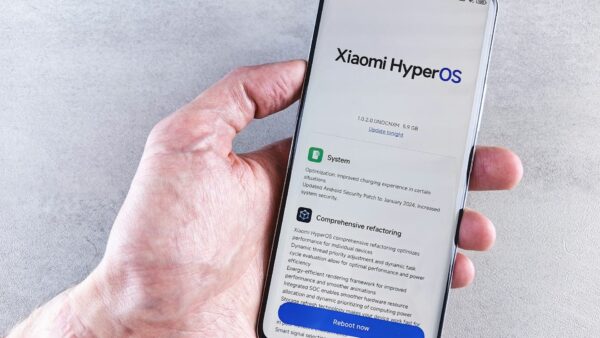


Every SIM-enabled phone sold in Nigeria is now meant to be registered by its IMEI number on the Nigerian Communications Commission’s new Device Management System, and the Commission has said devices that are not registered will not be allowed to work on Nigerian networks. The first phase has already started, which makes it the update most likely to affect the next phone you buy.
It sits alongside free daily data for students, the Dangote Refinery share offer running through investment and payment apps until 13 October, a January 2027 deadline for banks to keep payment data inside Nigeria, and Samsung’s Android 17 update finally reaching phones. Each section below covers what changed, what it means for you, and whether you need to do anything. For wider coverage beyond this roundup, We tracks the bigger stories shaping digital life in Nigeria.
Your next phone may need to be on the NCC’s new register before it can connect
Under the Device Management System, licensed importers must obtain NCC type approval, upload each device’s IMEI number and purchase invoice to the DMS portal, pay a validation fee and collect a pre-authorisation QR code. The Nigeria Customs Service then checks that document for duty before the phone is whitelisted for network use, according to TechCabal’s reporting on the framework. The first phase covers stock already in the market and devices imported from now on.
The registration work sits with importers and sellers rather than with you. The fees discussed so far are about ₦670 per IMEI for feature phones and lower-cost devices, and a little above ₦3,700 for high-end phones, and existing stock is not being charged the validation fee during the onboarding window. Edoyemi Ogoh, the NCC’s director of technical standards and network integrity, has said the register will hold device details such as IMEI numbers and will not give the Commission access to what is on your phone or to your private communications.
Price is the part worth watching. Budget phones that once sold for ₦50,000 to ₦100,000 now typically sit between ₦75,000 and ₦150,000, for reasons that have nothing to do with the register, and an official involved in stakeholder talks told TechCabal that retailers fear some importers will add ₦15,000 to ₦20,000 to a phone’s price on the back of a ₦3,700 charge. The benefit is real as well, since the same system is designed to block stolen phones reported to the authorities and keep cloned and uncertified devices off the networks.
If you’re buying a phone in the coming weeks, dial *#06# to see its IMEI, buy from a seller who issues a proper receipt, and ask directly whether the stock has been registered. Take extra care with used phones whose history you can’t confirm. A screen swap doesn’t change a phone’s IMEI, but a repair that replaces the main board can, which is one more reason to use a technician you trust, and our guide to phone screen replacement in Nigeria explains what you’re actually paying for when a part is changed.
Students now get 100MB of free data every day on approved learning platforms
The NCC launched its Zero-Rated Data Access to Educational Platforms and Content initiative on 10 September with the Federal Ministry of Education. Participating mobile networks cover up to 100MB a day when you use approved educational platforms, which Vanguard reports works out to about 700MB a week, 3GB a month and 36.5GB over a year.
The Ministry and the NCC choose and whitelist the platforms together, and the categories include learning management systems, digital libraries, educational repositories, teacher-development platforms and technical and vocational training sites. Several have already been approved, with more to be added as the scheme expands. NCC Executive Vice Chairman Dr Aminu Maida said the 100MB cap was set to keep the programme sustainable for the operators funding it, and industry estimates put the cost at around ₦15 billion a month if five million students use it.
How far 100MB takes you depends on what you open. Reading pages, PDFs and doing research uses very little, while video lessons can finish the day’s allowance quickly, so download lectures on Wi-Fi where you can. Ask your school which platforms are on the approved list, since the free data only applies there, and combine it with the settings in our guide to saving data in Nigeria so your regular bundle lasts longer too.
The Dangote IPO put share buying on your phone, and fraudsters followed it there
Dangote Petroleum Refinery opened its public offer on 14 September, selling 4.1 billion shares at ₦525 each to raise about ₦2.15 trillion. The minimum is 10 shares, or ₦5,250, and the offer closes on 13 October. More than 30 fintechs were approved as channels, including Bamboo, Cowrywise, Flutterwave, Moniepoint, Paga, Payaza, PiggyVest and Vetiva Invest, alongside banks and mobile money operators such as MTN MoMo, and Moniepoint has said the offer is available through its agents in all 774 local government areas.
Bamboo, Cowrywise and PiggyVest are waiving their direct fees on the offer, because each new investor is a customer they can keep long after the IPO closes, as TechCabal’s analysis of the fee waivers explains. Demand has been heavy, with Bamboo opening over 236,000 accounts in the week before launch, and Cowrywise said response times slowed for about an hour on opening day before full service returned.
The Securities and Exchange Commission issued a fraud warning the day the offer opened. It told investors to pay only through approved receiving agents and platforms, to ignore calls, emails, WhatsApp messages and social media adverts promising guaranteed or preferential allocation, and to verify any website or link before entering personal or financial details. The SEC also made clear that an account or platform simply existing doesn’t mean it’s authorised to collect your money.
If you decide to take part, go through an app, bank or agent on the official list, read the approved prospectus first, and never transfer money to an individual who says they can secure shares for you. This is information about how the offer works rather than a recommendation to buy, so the decision should rest on the prospectus and your own finances.
Banks have until January 2027 to keep your payment data inside Nigeria
The Central Bank of Nigeria has set 1 January 2027 as the deadline for payment data localisation, which requires financial institutions to keep critical customer and transaction records under local control. At an industry session reported by TechCabal, the CBN explained that the aim is local oversight of core financial records rather than cutting banks off from global cloud providers.
Most of this happens out of your sight, and done well you’ll never notice it. The practical risk for you is the migration itself, since banks and fintechs moving systems between now and January can run into outages and slow transfers. Keep a second way to pay, whether a card from another bank or a different app, so one bank’s bad day doesn’t leave you stranded. Where your question is about how your personal data is collected or shared rather than where it’s stored, the Nigeria Data Protection Commission is the regulator responsible.
Nigeria now has 195.1 million phone lines, and MTN may get more 5G airwaves
NCC figures released after the Commission’s 110th board meeting put total telecom subscriptions at 195.1 million in July, up from 192.23 million in June, Technext reports. MTN holds about 100 million of those, roughly 52.1 percent of the market, followed by Airtel with 66.76 million, Glo with 23.63 million and T2, formerly 9mobile, with 3.61 million. Operators have delivered 8,526 of the 12,179 coverage and capacity sites they committed to for 2026, a 70 percent delivery rate, while more than 5,000 fibre cuts in the first half of the year, mostly from road construction, continue to undo some of that progress.
Mafab Communications is seeking to transfer its 100MHz block in the 3.5GHz band and its 2×20MHz holding in the 2.1GHz band to MTN, according to TechCabal. Mafab paid $273.6 million for its 5G licence in 2021 but struggled to build a network from scratch. The deal still needs NCC approval and is described as part of a wider review of spectrum that is sitting underused. With 5G at 4.61 percent of mobile connections in June, the likeliest effect for you, if the transfer goes through, is more 5G capacity on MTN over time rather than anything you’ll notice this month.
If your network has felt slower lately, test it at different times of day and in different rooms before drawing conclusions, since evening congestion and weak indoor coverage explain a lot. Our Internet & Telecoms coverage follows network issues in more detail, and if you’re thinking of moving your line to an eSIM, our guide to getting an eSIM on MTN, Glo, Airtel or T2 walks through each network.
Samsung’s Android 17 update has started, and Galaxy A phones are next in line
Samsung began rolling out One UI 9, its Android 17 update, to the Galaxy S26 series on 16 September, with the wider global rollout following from 21 September. Samsung’s schedule adds recent flagships from 28 September, then the Galaxy S24, S23, S23 FE, Z6 series and Tab S11 around mid-October, with Galaxy A models following from mid-October and the rollout expected to finish by November. Timing varies by model, market and carrier, so treat those dates as a guide.
Android 17 also stops most apps from reading SMS messages that contain one-time passwords for three hours unless the app is the intended recipient, with your default messaging app exempt, according to Google’s Android 17 documentation. Your bank code still arrives on time in your inbox, but an app that used to fill it in automatically may stop doing so, which is a security measure rather than a fault.
Before the update lands, back up your phone, free up some storage and plan to leave it charging overnight for a few nights afterwards while it finishes optimising apps. A few days of slowness and extra warmth is normal, and our guide on why Android phones get slow after updates explains what’s happening. Updates carry security fixes, which is why our explainer on how long phones get security updates is worth reading before your next purchase, and our Apps & Software section covers the app changes that usually follow a big release.
Your checklist before the week is out
- Dial *#06#, write down your phone’s IMEI, and keep the receipt for any phone you buy from now on.
- If you’re a student, ask your school which learning platforms are covered by the NCC’s free daily data.
- If you plan to buy Dangote shares, use only an approved app, bank or agent before 13 October, and ignore anyone offering guaranteed allocation.
- Confirm the account name before every transfer and never share an OTP, whoever claims to be asking.
- Keep a second payment option ready while banks work towards the January 2027 data deadline.
- If you use a Samsung phone, back it up and free some storage before One UI 9 arrives.
- If you’re buying a charger along with a new phone, get it from the same trusted source, since cheap phone chargers are more dangerous than they look.
- Save official customer care channels for your bank and apps, and remember telco customer care is 300 on every network.
Before you forward the next viral tech headline, check where it came from
Policy stories spread quickly on WhatsApp and X, and not every screenshot is genuine. Before acting on a claim that a regulator has banned, approved or changed something, check the regulator’s own website or verified social accounts, or a named publication that links to the original notice. The NCC, CBN, SEC, NITDA and NDPC all publish official notices, and a real change almost always appears there first.
Most of what changed this week will take weeks or months to reach you, and the heavy lifting falls on importers, banks and operators rather than on you. The two stories that need your attention now are the Dangote offer, if you intend to take part, and the next phone you buy, since both are places where one careless step can cost you real money. TechSocial will keep following each of these as they develop.